


Take a moment to think about the effect water has on us as adults… imagine lazing in a rowboat on a tranquil lake at dusk with only the occasional hoot of an owl or chipper of a bird. Now imagine standing on the rocks beside the ocean as gigantic swells crash against the shore, or next to a raging river or waterfall. Water has the power to both calm and invigorate us; and it is no different for our children.
Water is a natural element that provides many and varied opportunities for play, and through play, learning for all ages and through all stages of development.
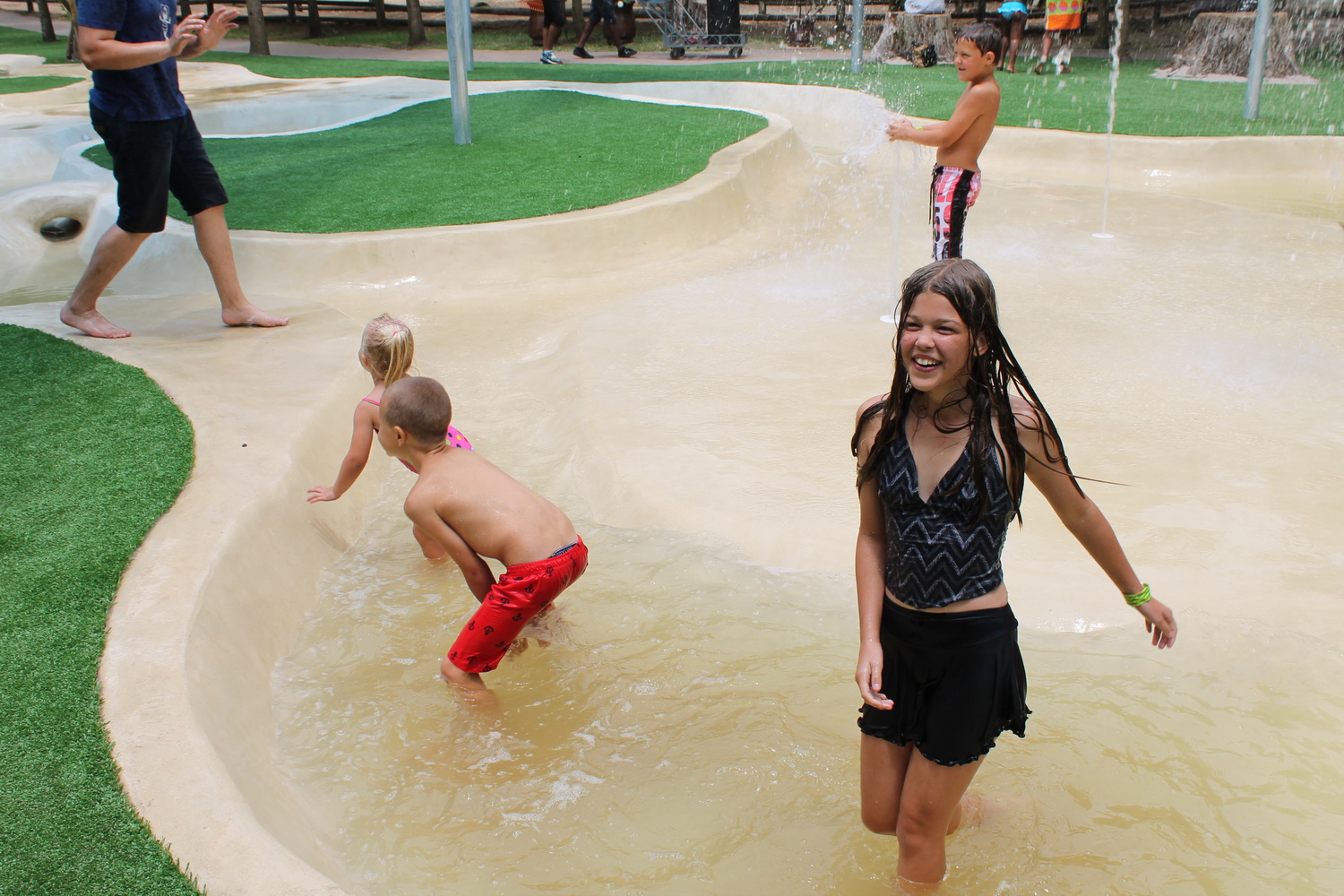
1. Energising or Calming Benefits
Water games such as swimming, water slides, or simply splashing about are great ways for children to work off some pent up energy. On the other end of the scale, quiet water games like pouring, scooping or gliding a toy boat through water can be therapeutic for a child needing to wind down after a day spent climbing and running about.
2. Motor Skills Development
Gross motor skills develop as children splash, kick and wade through water – even small babies are learning these skills as they try to grab water as you pour it. Swimming is excellent for toning muscles and building strength, as is encouraging your child to carry containers of water from play area to play area.
Fine motor skills and hand-eye coordination develop as children scoop, pour and decant water from one container to the next. Sensory experiences are enhanced as children learn about different temperatures and textures.
3. Encouraging Social Skills
Who remembers playing Marco Polo as a child? This is probably one of the first team water sports children begin to play in the pool, and in teenage years as swimming skills improve, water polo and synchronised swimming are great team sports for water-loving children.
In early years, social skills in water play can be developed by sharing buckets, helping each other pour into other pots and take turns with play equipment. These skills teach children how to conduct friendships and play as part of a team in future.

4. Building Imaginations and Stimulating Creativity
Water play offers endless opportunities for little imaginations to get creative. With varying containers, utensils and toys children can create their own kitchens, animal parks or construction sites, playing out any and all roles they can imagine. Bubbles and food colouring, different sized jugs, tubes and buckets add to the possibilities for children to create their own water play environments.
5. Developing Cognitive Skills
While children are playing with water they may also be discovering important maths and science concepts. They may count how many scoops of water it takes to fill a jug, and then how many jugs it takes to fill a bucket. They will discover scientific principles like how flowing water will take the path of least resistance, which objects float and sink, what substances dissolve in water, or how oil and water don’t mix.
Children also learn, through play, concepts of empty and full; more and less; same and different; and that larger objects don’t necessarily sink while small objects may not float.
6. The Art of Communication and Language Building
With the variety of water play options, along come opportunities to build greater vocabularies. Children playing together will practice communication skills by talking about what they are doing, or asking to share a particular piece of equipment.
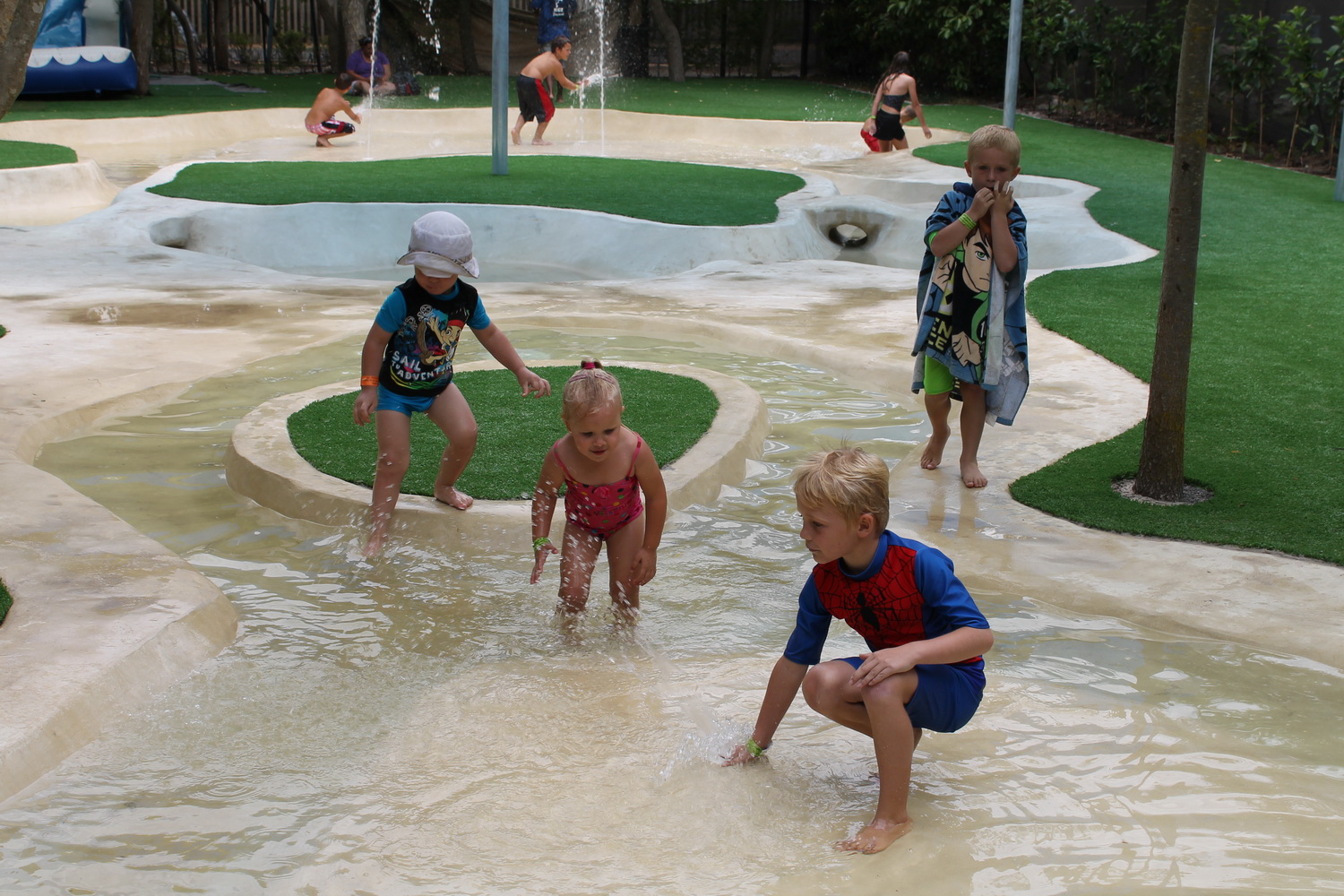
Some water play ideas:
- Use old tyres to hold a plastic basin filled with water - one for water, one for sand, with a work surface to make mud pies. Hang plastic kitchen utensils for children to have their own mud kitchen.
- Give your children different sized jugs, measuring spoons, funnels and bottles.
- Provide a basket of plastic animals, logs and twigs for children to use their imaginations in making animal enclosures, bridges and water slides for their animals.
- Create a firefighter corner with buckets, hosepipes, boots and hats;
- Set up sandpits with buckets, spades, sandcastle shapes;
- Give your child an area to plant and care for their own plants. Provide watering cans, child-sized garden spades and rakes and teach them how to look after their garden
- Bath time is a great opportunity for water play. A net bag is filled with floating toys, funnels and scoops is convenient to keep in the bathroom. Bath ‘stickers’ for alphabet and number play are also fun while providing an opportunity for learning.
- Mud kitchen – Set aside an area of your garden for your children ‘to get their hands dirty’. Supply kitchen utensils, baking tins, muffin pans, measuring scoops, rolling pins, egg beaters, sieves. Don’t forget a bucket of soapy water and dry towels for cleaning off afterwards!
- Practical Tips:
- Remember the sunblock for all outdoor play
- While kids are playing with water remember to keep them hydrated too – offer drinking water. This can be another pouring exercise – preparing their own drink!
- Teach children to pack away and clean up after themselves – provide containers to store their water toys neatly.
Resources:


