


Childhood is no doubt the most active stage during our lifetime. Take a few moments to think back on your own childhood and those memories are likely to be brimful of tree climbing, bike riding, running, swinging, dancing and singing. Possibly one of the most challenging aspects of raising a disabled child is trying to give them a childhood they deserve within the confines of their physical limitations.
We need to remember to take a holistic approach to keeping our kids active – not only exercising their bodies, but their minds as well to build on their physical, mental, emotional and spiritual well-being. We also need to remember that it doesn’t need to be all hard work if we find fun and innovative ways to turn therapy into play and part of normal life.
Language Stimulation: Advice from a Speech Therapist
Naeema Bawa-Mohamed, a Cape Town based Speech and Language Therapist, shares her advice about keeping disabled children active with regards to language stimulation:
“As parents (especially parents of children with special needs), we have to learn to work smarter, not harder. This is true for language stimulation as well. Every interaction, outing, daily routine or even just quiet bonding time is an opportunity for language learning. Talk about what you see, what you are doing, what the child is doing and most importantly give them a chance to respond (this doesn't have to be a verbal response). An important concept to remember (and a very difficult one for us, especially with children who have little or no verbal speech) is OWL - OBSERVE, WAIT, LISTEN. Very often we take it for granted that because a child can't talk they have nothing to say. This can't be further from the truth. We as communication partners need to give them time to respond in a manner that they are able to. For some children it might be a smile, others eye gaze, some a speech output device as their 'voice', but if we don't allow them the space and time to respond, we miss out on opportunities for reciprocal interaction.
Keeping Little Minds Active: A Classroom Activity from a Teacher
Elma Horn, a special needs teacher at Alta du Toit School, Cape Town, shared a classroom activity for keeping minds stimulated while actively engaging learners in making good life choices. Children are given a worksheet with drawings of a variety of food choices, both healthy and unhealthy. They are asked to select the items that they would like to have for breakfast. A discussion follows around their choices and more nutritionally wise choices if applicable. Afterwards, the children page through magazines looking for pictures of healthy breakfast foods. The children then cut out the pictures and make a collage of healthy food choices.
For some children, using a pair of scissors to cut out the pictures is exercising their fine motor skills at the same time. Other children with more severe disabilities may need more help with this stage, but can still be involved in the process by choosing the pictures and pointing to where they should be placed.

Fun and Adventure: A Parent’s Perspective
With school, doctor and therapist visits consuming the daily schedule of most special needs parents, many of us stand the chance of going into survival mode from time to time, or it becomes so much a way of life that we forget that kids need to be kids. Fun and adventure is an integral part of childhood and should rank high up on our priorities for keeping our kids active.
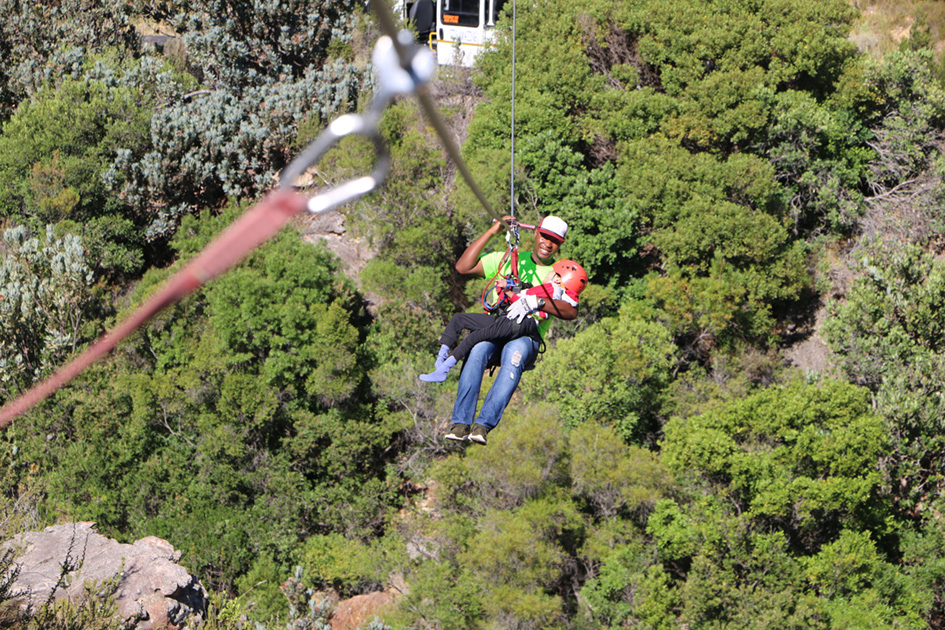
As co-founder of Warrior On Wheels Foundation, focused on adventure for special needs children, and parent to a differently-abled 17 year old boy, I get to see first-hand how little eyes light up at the thrill of experiencing something new, how faces beam with ear to ear smiles as a wheelchair-bound child gets to ride a horse for the first time or participate in an event usually restricted to their more able-bodied siblings and friends. With a little help the sky is the limit – or maybe it isn’t as we recently saw three special kiddies take to the sky on a zipslide adventure and show us all that the only limitations in life are the ones we place on ourselves.
Making Therapy Count: A Feel Good Story from a Physiotherapist
Liezl Mullenberg, a therapist at Friends Day Centre shares a story highlighting the importance of a family following through on the activities, programmes and advice given by therapists to ensure the development of their daughter’s walking ability.
“Taihreem is a 10 year old little girl, who has been attending Friends Day Centre since September 2008. Taihreem has a very strong will and personality and is not easily convinced to participate in any activity that is not of her own choice. In October 2015 she had Botox in both her hamstrings and her left bicep. Her parents were very involved and through numerous consultations with the therapists at the Centre and other medical professionals, they developed an understanding of the important role they played in maximising the benefits of the Botox treatment.
Their will and determination to help her included their whole family, each with a role to play. They ensured that the therapy she received at the Centre was carried through at home. Taihreem’s class educarer, Minah, was caught up in the changes she witnessed and reserved a part of every morning to encourage Taihreem’s standing and walking in the parallel bars.
Consequently 5 months later there has been such an enormous improvement in Taihreem’s function. She is able to stand with moderate to minimum assistance and take a few steps in the parallel bars. Her attitude to therapy and all things required of her at this stage, has also greatly improved. All of this would and could not have been possible without the commitment and follow through of her main role players, her parents!”
Be Innovative: Discard ’The Box’ and Do Things Differently
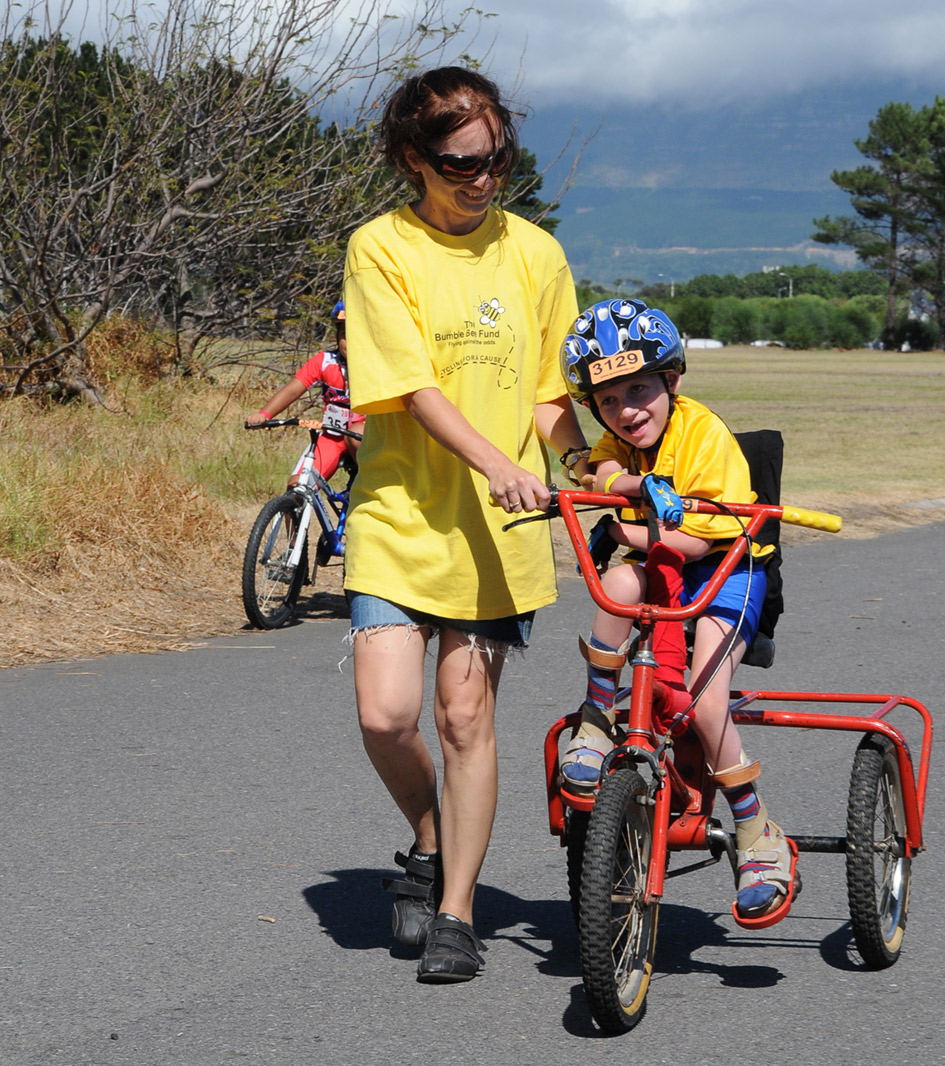
I have sometimes joked in the past, saying it’s time to play ‘MacGuyver Mom’ when trying to improvise with a task that isn’t quite working out for my son the way it would for another child. A few years ago, our physiotherapists found a large unused tricycle that was handed on to Damian. With some help, the trike was adapted with a backrest and straps to hold him up, and a pair of sandals bolted to the pedals to keep his feet in position. The idea was to push the bicycle with Damian on it as a fun way to get his legs moving, rather than just putting him on a therapy mat and doing stretches for him. In no time at all, Damian was actually doing the pedaling himself and in 2012 he participated in the Cape Town Junior Cycle Tour on his adapted tricycle. This is just one idea of turning what could be tedious and stressful therapy sessions into fun playtime to keep disabled kids active.
As Naeema says: “Above all, never doubt that you are doing a great job! Parenting unfortunately doesn't come with a manual and with all the added challenges we face with special needs it’s easy to forget: first and foremost this is just a child like any other - with extra special qualities and gifts that are just wrapped up in a different packaging.”
Resources:
Naeema Bawa-Mohamed (Speech & Language Therapist, Cape Town)
Liezl Mullenberg (Head of Department, Friends Day Centre)
Elma Horn (Special Needs Teacher, Alta du Toit School)
Deirdré Gower (Co-founder, Warrior On Wheels Foundation)
Images:
Pixabay
Deirdré Amy Gower


