


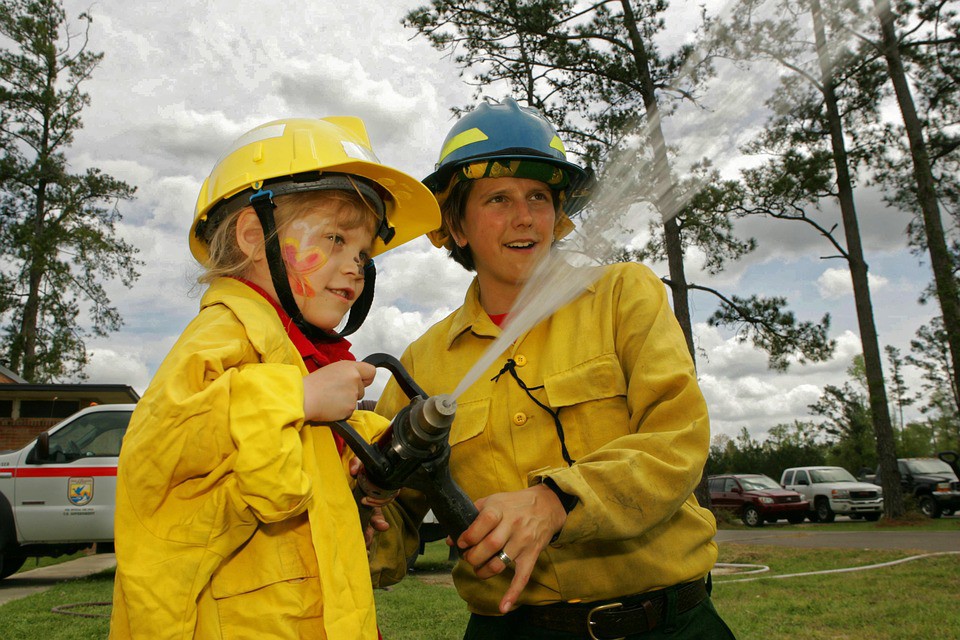
We all know that play is important for children’s development, but mostly when we think of play we imagine our kids running about kicking balls, swinging, climbing, modeling with clay or building blocks; but as early as the late nineteenth century, researchers have found imaginative play to be a vital component in a child’s advancement. Dramatic play, when children act out roles they have assigned, or accepted, allows children to cross the barriers of reality into imaginative play; developing skills in communication, maths, literacy and social awareness. Studies show that parents who read to their children, tell stories or explain social and natural issues are more likely to encourage role play.
“A child’s play is not simply a reproduction of what he has experienced, but a creative reworking of the impressions he has acquired.” Vygotsky
Development through Fantasy Play
Fantasy play creates opportunities for the balanced growth of a child. It is often dismissed as less important than other types of play or learning, but it has significant value in a child’s social, physical, cognitive and language development.
- Social/Emotional
Children who engage in fantasy play are more equipped to display empathy towards others because they have “walked a mile in their shoes” so to speak. By pretending to be someone else, they gain another perspective on experiences. They also learn to cope with fears by recreating challenging real life experiences in an environment where they are masters of the outcome. Group fantasy play teaches children to negotiate roles and learn valuable social skills such as problem solving and communication.
- Physical
Cops chase robbers, firemen climb ladders, bakers stir cookie dough and knights slay dragons – during dramatic play children use both gross and fine motor skills as well as eye-hand co-ordination to achieve the desired results of their play.
- Cognitive
Being author of their own tale, children take snippets from chapters of their real life stories, to recreate new scenarios. When they are mimicking the nurse measuring medicine doses, or the banker counting out notes, they are stacking the building blocks for maths skills; and when checking their recipe ingredient list for the mud cake they are baking or writing up prescriptions for their doll who has a tummy ache, literacy skills are on the rise. Problem solving, reasoning and drawing conclusions are all abilities that develop through role-play. - Language
How often have you heard your tiny tot muttering to her doll, using words you know must have piqued her interest from an out of the ordinary source, but that she probably has no idea what they mean? This is part of vocabulary and language learning acquired through role-playing. Children repeat words they have heard, inserting them into their fantasy scenarios. They build vocabulary through learning new words that are appropriate for their pretend roles, and they do this by asking and answering questions, and explaining their actions. They also learn that listening is as important as speaking when trying to master their roles, recognizing the value of communication and collaboration.
“Play is our brain’s favourite way of learning.” Diane Ackerman
The World is a Stage
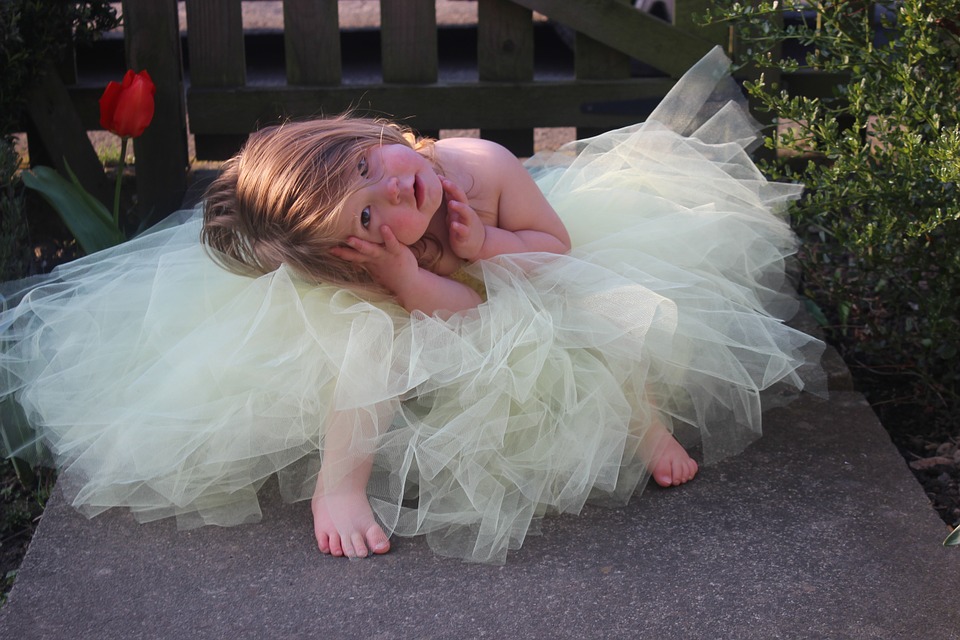
If the play area is adequately prepared, your child’s world becomes their stage. Their environment should inspire imagination and creative play. With enticing outfits and imaginative props, little boys and girls become kings and queens, knights and fairies, or firemen and doctors. It doesn’t need to cost the buried treasure to set the stage, and your little engineers should be encouraged to extend their creativity by transforming blankets and tables into home-crafted forts. If you want to sneak in a little extra learning opportunity, provide cards, chalkboards and signs to encourage literacy through play.
“Fantasy is a necessary ingredient in living. It’s a way of looking at life through the wrong end of a telescope.” Dr Seuss
How to Encourage Imaginative Play
- Provide the Setting and Props
Let your own imagination and creative flair loose in encouraging role play for your children:
Play Kitchen – most of these supplies can come from your own kitchen. Measuring jugs, spoons, bowls, utensils, pots and pans are great fun for budding chefs.
Play Shop – calculators, Monopoly money, and some household items or non-perishable food items are an easy set up for enthusiastic cashiers.
Play Fire Station – it’s a no-brainer that this is an outdoor scene. Buckets, hosepipes, a pair of wellies and a cool outfit, and Bob’s your fireman! Don’t forget the towels! - Be Your Child’s Accomplice
Children love when their parents get involved in their games and play along. There is a meme that went viral on social media some time ago with the caption: “I don’t care how cool you think you are, when a two year old hands you a toy telephone, you answer it!” This sums it up – play with your child! Take their role-play seriously, understanding its value, and accept the role they assign you. If your toddler offers you tea, ask for sugar, if she wants to take your temperature, cough a little for authenticity. - Provide Experiences
Take your child on outings that spark curiosity, read stories that inspire imagination and ask questions that encourage them to pretend they are someone, or something else in order to gain another perspective.

“There is no activity for which young children are better prepared than fantasy play. Nothing is more dependable and risk-free, and the dangers are only pretend,” ‘The Importance of Imaginary Play’, 2004, Vivian Gussin Paley.
Resources:
Early Childhood News
Kiddy Charts
Psychology Today
Learning 4 Kids


